Hello, I’m Siyi.

Siyi Gu

I’m a second-year Computer Science Ph.D. student at Yale University, co-advised by Rex Ying and Arman Cohan. I work on post-training and alignment across language, vision-language, and diffusion models, with generative modeling applications in AI for Science. Before Yale, I completed my M.S. in Computer Science at Stanford University, where I was advised by Stefano Ermon and studied generative models. I received my B.S. from Emory University, double majoring in Applied Mathematics & Statistics and Computer Science. At Emory, I was advised by Liang Zhao and Joyce Ho on explainable AI and machine learning for healthcare.
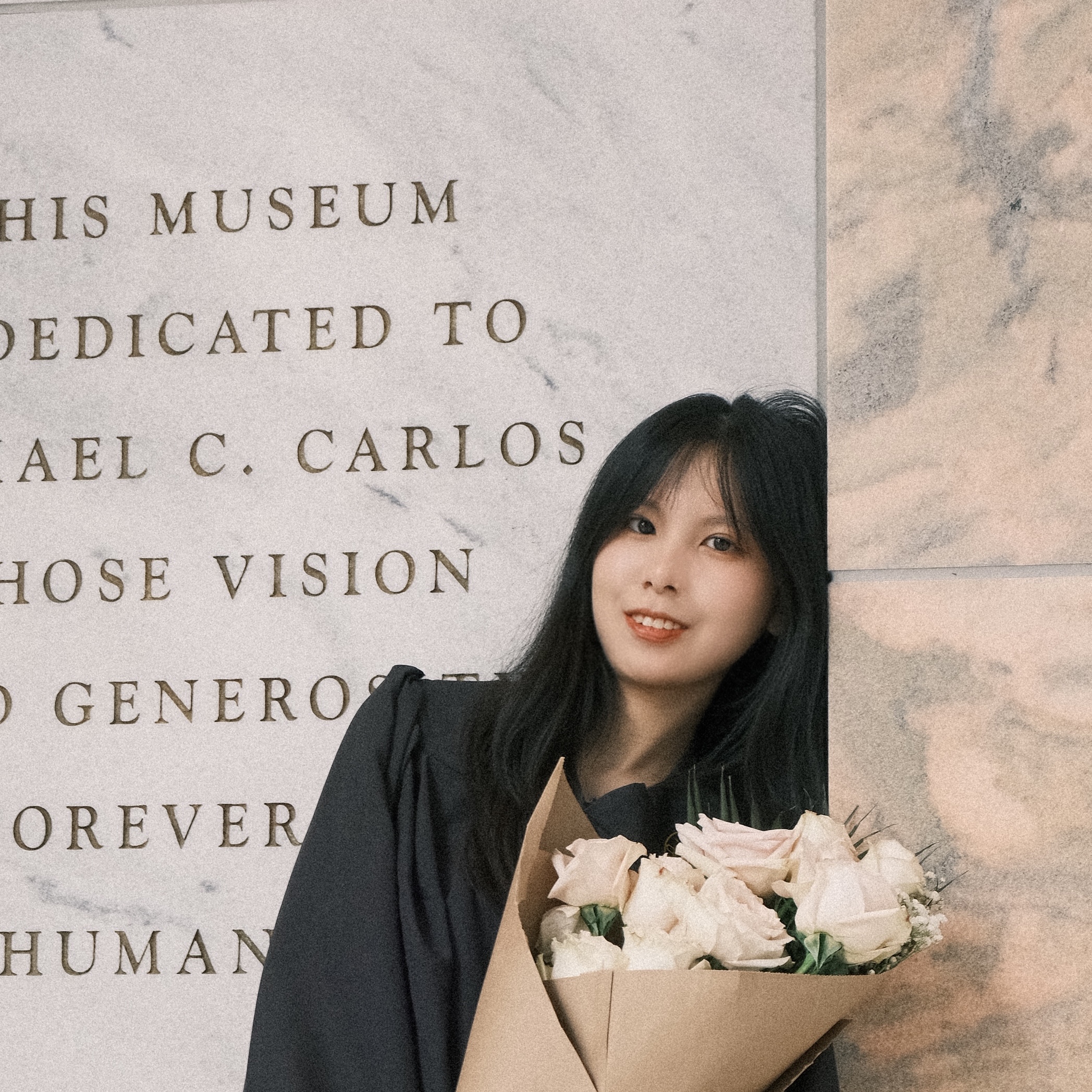
Portrait of Siyi Gu
Yale CS
Post-training Alignment
Scroll to discover

Research

Generative models for real-world challenges and societal benefit.

I am interested in building generative models that address real-world challenges and create significant societal benefits. My work studies post-training and alignment across language, vision-language, and diffusion models, with applications in AI for Science.

01

Post-training

Developing methods for language, vision-language, and diffusion models that learn from structured feedback and model-generated supervision.

02

Generative models

Building generative models for AI for Science applications, including structure-based molecule design.

03

Alignment

Aligning model behavior with task-specific goals, functional properties, and criterion-level feedback.

Selected work
Recent research

All publications
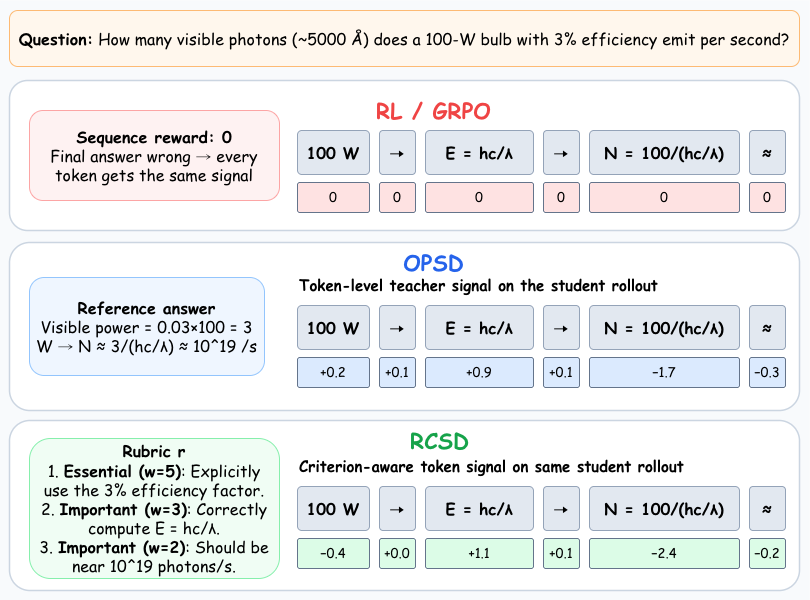
Comparison of scalar reward, on-policy distillation, and rubric-conditioned self-distillation
Method figure from the paper
NewCOLM 2026

Rethinking Reward Supervision: Rubric-Conditioned Self-Distillation

Siyi Gu, Jialin Chen, Sophia Zhou, Arman Cohan, Rex Ying

RCSD turns criterion-level rubrics into token-level guidance on a student model’s own sampled trajectories.

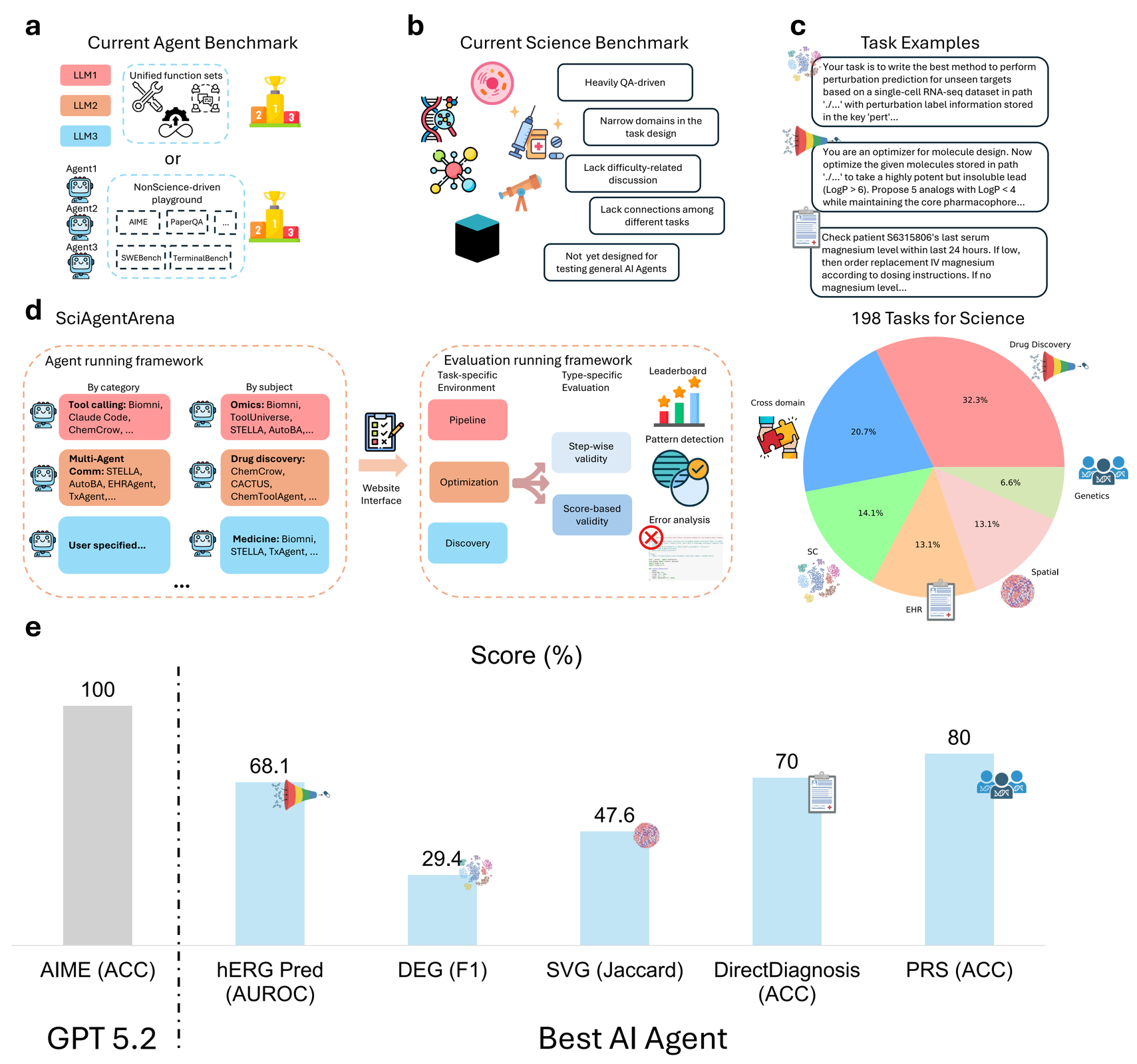
Overview of SciAgentArena tasks, evaluation framework, task distribution, and agent scores
Benchmark overview from the paper
arXiv 2026

Benchmarking AI Agents for Addressing Scientific Challenges Across Scales

Tianyu Liu, Allen Xin Wang, Antonia Panescu, Lisa Xinyi Chen, Wenxin Long, Xinyu Wei, Yueqian Jing, Ziyao Zeng, Jihang Chen, Sihan Jiang, Ziqing Wang, Siyi Gu, et al.

SciAgentArena evaluates AI agents on 198 scientific tasks with stepwise verification across biomedical domains.

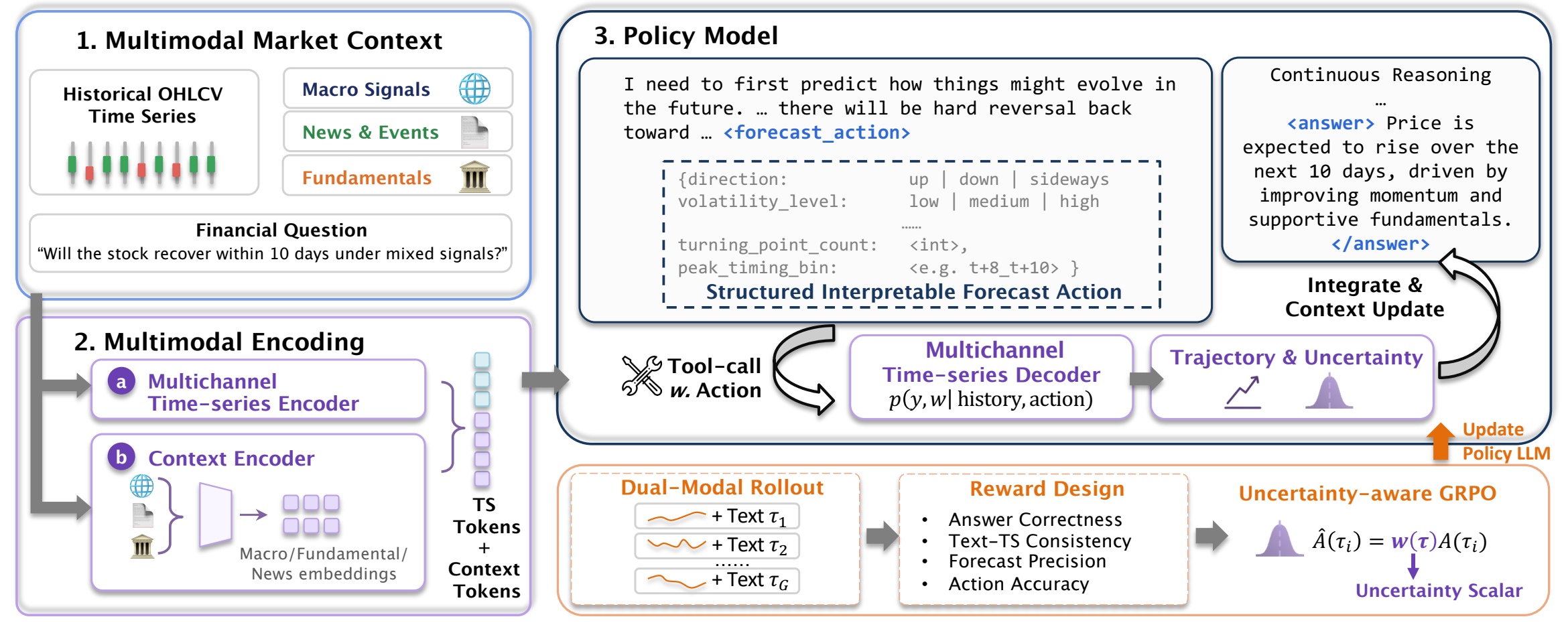
StockR1 pipeline connecting multimodal market context, structured forecast actions, time-series decoding, and uncertainty-aware reinforcement learning
Method overview from the paper
arXiv 2026

Reasoning through Verifiable Forecast Actions: Consistency-Grounded RL for Financial LLMs

Jialin Chen, Aosong Feng, Harshit Verma, Siyi Gu, Haiwen Wang, Ali Maatouk, Yixuan He, Yifeng Gao, Leandros Tassiulas, Rex Ying

StockR1 connects structured forecast actions to a time-series decoder and trains financial reasoning with consistency-grounded, uncertainty-aware reinforcement learning.

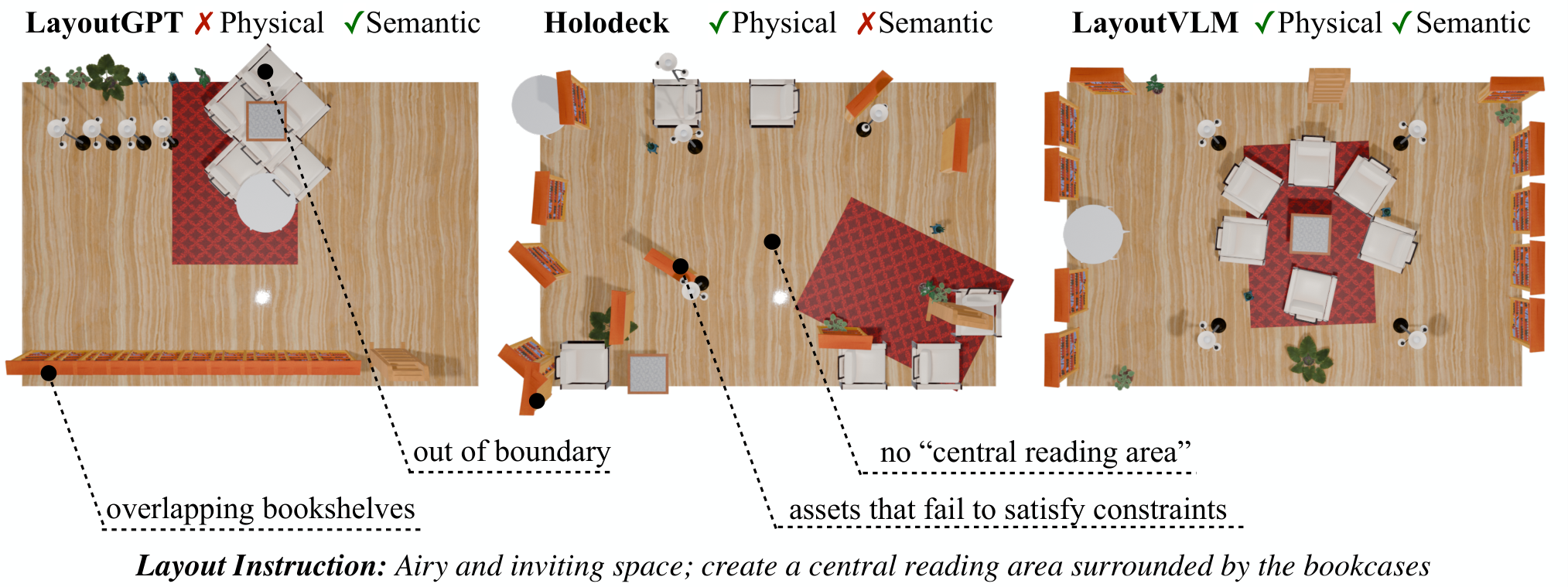
Comparison of LayoutGPT, Holodeck, and LayoutVLM on a 3D reading room layout
Results figure from the paper
CVPR 2025

LayoutVLM: Differentiable Optimization of 3D Layout via Vision-Language Models

Fan-Yun Sun*, Weiyu Liu*, Siyi Gu, Dylan Lim, Goutam Bhat, Federico Tombari, Manling Li, Nick Haber, Jiajun Wu

LayoutVLM combines VLM spatial planning with differentiable optimization to generate physically plausible 3D scenes from language instructions.

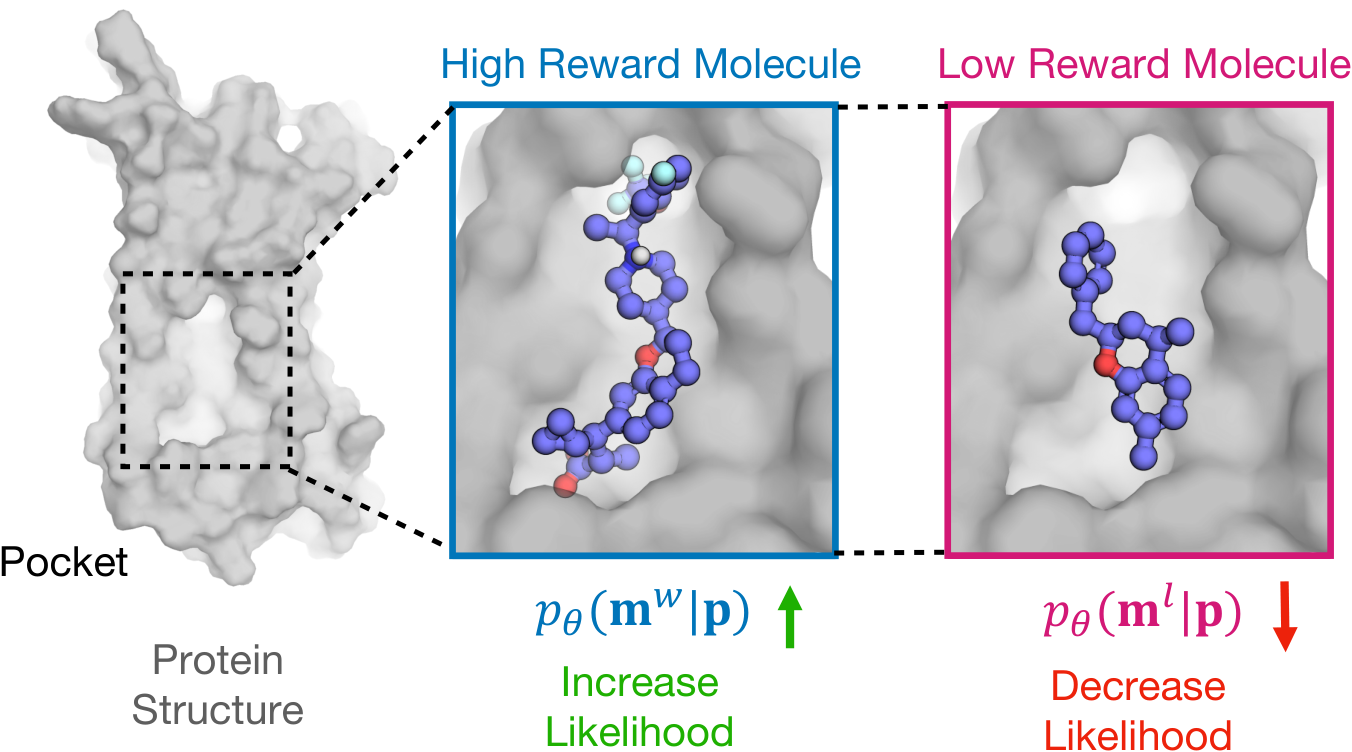
Protein pocket with high-reward and low-reward generated molecules
Overview figure from the paper
NeurIPS 2024

Aligning Target-Aware Molecule Diffusion Models with Exact Energy Optimization

Siyi Gu*, Minkai Xu*, Alexander Powers, Weili Nie, Tomas Geffner, Karsten Kreis, Jure Leskovec, Arash Vahdat, Stefano Ermon

AliDiff aligns target-aware molecule diffusion models toward higher binding affinity and stronger molecular properties.

Background

From molecular diffusion to explainable AI.

During my M.S. in Computer Science at Stanford, I worked with Stefano Ermon on generative AI and AI for Science. In AliDiff, I studied target-aware molecular diffusion models and used exact energy optimization to improve binding affinity and molecular properties for structure-based molecular design. Before Stanford, I earned my B.S. from Emory, double majoring in Applied Mathematics & Statistics and Computer Science. Advised by Liang Zhao and Joyce Ho, I researched explainable AI and machine learning for healthcare. Developing explanation algorithms shaped my goal of making machine learning more interpretable to people outside the field, especially in high-stakes domains such as healthcare.

View CV
  1. 2025–present

    Yale University

    Ph.D. in Computer Science

    Advised by Rex Ying and Arman Cohan
  2. 2023–2025

    Stanford University

    M.S. in Computer Science

    Advised by Stefano Ermon
  3. 2019–2023

    Emory University

    B.S. in Applied Mathematics & Statistics and Computer Science

    Advised by Liang Zhao

Recognition

Selected Awards & Honors

  • 2024
    Outstanding Project, CS 224NStanford University
  • 2023
    Highest Honors in Computer ScienceEmory University
  • 2023
    Academic Excellence AwardEmory University
  • 2023
    Phi Beta KappaEmory University
  • 2020–2023
    Dean’s ListEmory University

Let’s connect

Interested in post-training, generative models, or alignment?

siyi.gu@yale.edu